
By Alika Naresh
Agriculture is one of the major income activities in India. According to Census 2011, there are 11.8 crore farmers are cultivating the lands. There have been a lot of changes in the Indian agriculture system. Farmers adopted modern methods, increased mechanization,n and technologies improved in agriculture. But still, many farmers in villages are unable to get information on suitable crops, weather, usage of fertilizers and pesticides, soil testing, government schemes, and other information related to agriculture. Agents are selling fertilizers to farmers which are not necessary for the particular decrease of the crop. The lack of regular visits by department officials is making farmers depend on agents. Due to this input costs increased and finally farmers ended up with either less profits or losses.
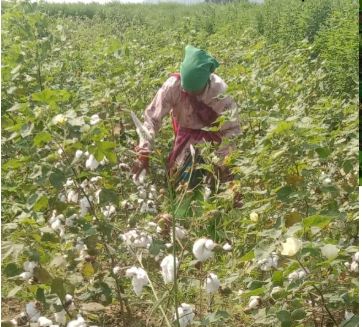
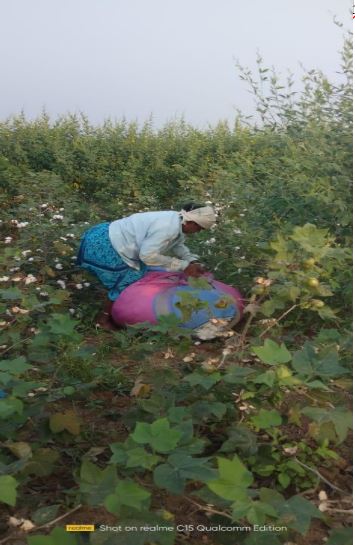
Asifabad district (officially Kumuram Bheem Asifabad district) in Telangana is predominantly an agricultural region with a significant tribal population. The district’s economy relies heavily on farming, with rain-fed agriculture being the primary mode of cultivation. The major crops in the district are Cotton and redgram.
To find out the actual scenario on the ground, we have conducted the baseline survey among the farmers in our 15 villages project area in the Asifabad District of Telangana. Totally more than 370 farmers responded to the survey. The findings are below.

Fig 1. No. of farmers using chemical fertilizers
The above figure clearly states that more than 98% of farmers out of surveyed 385 farmers are using chemical fertilizers. It has become a norm that farmers are use chemical fertilizers and pesticides regularly for their crops. The Green Revolution made more access to chemical fertilizers and pesticides and farmers got habituated to use these chemicals in the fields.

Fig 2. Suggestions taken from various persons to buy fertilizers and pesticides
As per the above figure, farmers are not getting any help from agriculture professionals before buying fertilizers and pesticides. Only 14 farmers out of 385 are contacting government officers to take suggestions to buy required fertilizers and pesticides. 225 farmers are directly buying the chemicals without contacting anyone. They are making the decisions by themselves only. 107 farmers are buying based on the suggestions from fertilizer shop agents. These agents give other pesticides even though it is not necessary. All these things make the farmers invest more in crops leading to heavy input costs.
The average expenditure to cultivate the cotton crop in one acre is Rs. 21000. The average income is Rs. 35500 per acre. The farmer is getting only an income of Rs. 14500 per acre in a year.
To address the above issue, the Centre for Youth Development and Activities is implementing a Holistic Rural Development Project in 15 villages of Asifabad district in Telangana with the financial support of HDFC Bank Parivartan. The one of major objectives of the program is to increase the farmer’s income while farmers transfer from chemical farming to organic farming. To achieve this, we have planned to work with cotton farmers on sustainable agricultural methods. To enhance the farmer income, we have decided to reduce the input cost for farmers, so that farmers can get more income. For this, we have collaborated with Krishi Vignan Kendra and the Agriculture department in the district.
We have selected 3 farmers from each village, a total of 45 farmers, and provided the regular hybrid seeds for one acre but we have asked them to sow in 6:1 ration of cotton and redgram. The traditional sowing method is 10:2 of Cotton and red gram seeds. However, the KVK scientists suggested doing a 6:1 ratio to get more income. We conducted the soil test earlier, and based on that, we have given only one bag of Urea and DAP. Earlier farmers used to apply 3 to 4 bags of Urea bags irrespective of the soil nature. Then we provided the sticky traps and pheromones to attract the pests and insects. And we have trained the farmers to prepare jeevamruth and apply it on plants and also provided the Neem oil for plant strength. All these methods helped a lot to get a good yield for farmers.
- Across 45 demo plots of 45 acres, so far on average, a total of 297.36 quintals of cotton were produced, generating 21,05,052/- in revenue. With a total cost of 6,88,235/- the initiative achieved a net profit of 14,16,817/- (On average, each demo plot expenditure was Rs. 15294.10 and the production is 6.61 quintals and the net profit is Rs. 31484.82)
- Avg. expenditure is Rs. 20500, production is 5.2 quintals, and avg. net profit is Rs. 16940 per acre in normal practices.
- Other than cotton, each demo plot produces 1500 to 2000 Kg of Redgram yield, which is an income of Rs. 12000 to Rs.15000. The farmers don’t sell this program and generally they consume it only.
- One of our farmers, Mr. Y Kamalakar, got a yield of 13 quintals which is one of the best yields in the project area. The full details about his work is given below.
| Impact Area | Before condition | After condition |
| Yield Improvement | Cotton yield was inconsistent and low due to traditional practices. Avg was 5 quintals per acre | Cotton yield increased to 11 quintals per acre, generating Rs 81400 in revenue with a net profit of Rs. 60050 |
| Input Costs | High input costs due to excessive and unplanned use of chemical fertilizers and pesticides. Avg was Rs. 21350 | Costs are reduced significantly with subsidized inputs, optimized fertilizer usage, and organic pest management practices. This year’s cost was Rs. 14500 |
| Knowledge and Skills | Limited awareness of sustainable farming techniques, soil testing, and organic practices. | Training sessions empowered the farmer to adopt and sustain improved practices independently. |
With this intervention, we were able to show the farmers how to reduce input costs with sustainable agricultural practices and enhance their net income in farming. The practice of sustainable agricultural methods also strengthens the soil as well.

Mr. Ravinder, Field Coordinator with Mr. Y Kamalakar

Mr. Balakrishna, Agriculture Specialist giving training on the preparation of Jeevamruth to farmers


(Naresh is the program manager of, the HDFC Parivartan Project at Asifabad)

This Post Has One Comment
Fast foll I would like to thanks HDFC Bank 🏦 parivartan and CYDA because we doing an agricultural project .
1.prasthutha raithulaku thama pantaku antha mothadhulo aruvulu vadalo raithulaku theliyadam ledhu andhukosame soil test chesi thagina mothadhulo aruvulu vadadam jarigindhi
2. Ela thagina mothadhulo aruvulu vadadam dhwara karchu thaggindhi
3.karchu thaggadam valana adhayam perigindhi
4.prasthutha samayam lo pandinchina pantaku madhathu dhara labhenchadam ledhu
5.mana government lu cinima budget perigithe ticket 🎫 reatlu penchukomantundhi kani pandinche pantaku pettubadi perigithe rate mathram penchadhu
6.Etuvanti samayalo HDFC Bank 🏦 parivartan and CYDA thakkuva karchutho adhika labalu andhinche suchanalu and manku sahayam checthundhi thank you HDFC Bank 🏦 parivartan and CYDA 🙏🙏