
Nimbodi is a rural village in India where many families face economic challenges, relying on agriculture for survival. Education is crucial in such communities as it offers children the opportunity to break the cycle of poverty and create a better future. In villages like Nimbodi, access to quality education can be limited due to factors like inadequate infrastructure, lack of resources and financial constraints.
Struggles of a tiny tot
At seven, Amol Mohan Garme faced a life of hardship and uncertainty. A second-grade student at ZP School Nimbodi, lived with his mother and grandparents in a modest rental home. His mother worked tirelessly in the fields for a meager income, while his father had abandoned them years ago, leaving them alone. Amol’s constant smile could not hide the sorrow in his heart. Despite his cheerful nature, he struggled with his studies and his academic performance was not up to the mark. His love for learning had faded, as he had difficulty recognizing basic Marathi and English alphabets, with numerals seeming like an overwhelming challenge.
A moment of realization
Considering the issues, CYDA stepped in to transform the lives of primary school students, ensuring quality education through innovative teaching methods and educational materials. They were a group driven by a deep commitment to improving children’s education and well-being. Upon assessing the students, the facilitator quickly noticed Amol’s struggles. Instead of scolding Amol, the facilitator took a compassionate, and creative approach to support his learning.
Innovative approach to teaching
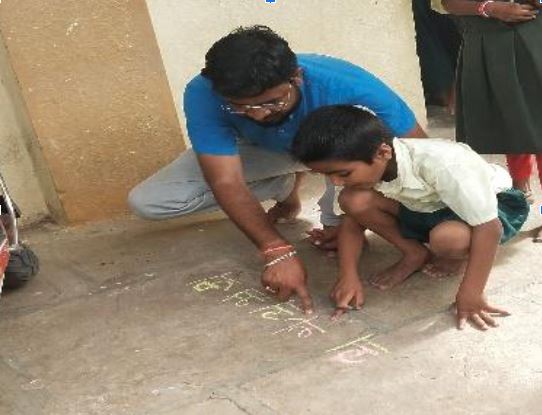
Recognizing Amol’s struggles were not due to laziness but disengagement, they introduced tools like soil, action songs, fruits, and colorful charts to bring the classroom to life. These activities helped Amol associate letters and numbers with real-world objects, transforming his learning experience. For the first time, Amol felt joy in the classroom, where he could engage, laugh and explore. With CYDA’s support, the once boring task of learning Marathi and English alphabets became a fun, playful journey, sparking Amol’s curiosity and enthusiasm for education.
Amol’s Transformation: From Struggle to Success
As weeks passed, Amol’s transformation became apparent. His once gloomy eyes sparkled with curiosity. He confidently identified Marathi and English alphabets and numbers that once seemed abstract now made sense. Amol could count from 1 to 20 with ease and improved his writing from barely legible scribbles to clear words. He learned to read and write two-letter Marathi words and solve simple Mathematics problems. Beyond academics, Amol’s confidence grew. He no longer hesitated to answer questions or participate in class, even helping classmates, showing that he had discovered the joy of learning.
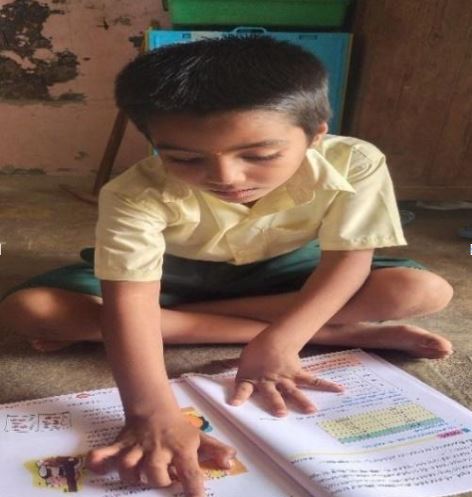
“Sometimes, I feel like giving up,” Amol admitted on one such day, but CYDA team words echoed in his mind: “You can do it, Amol. Believe in yourself, and you will overcome.” And so, Amol did.
The joy of Amol’s family
Amol’s transformation was a miracle for his family. His mother and grandparents, who had worked tirelessly to make ends meet, watched with teary eyes as his enthusiasm for learning grew. Amol’s progress in school, once a distant dream, became a reality thanks to CYDA’s unwavering support.
“Amol’s success shows that with the right support, every child can achieve greatness,” said class teacher who witnessed his remarkable turnaround. “It’s not about resources, but the heart with which you teach,” she added, emphasizing the impact of compassionate education.
The power of compassionate teaching
Amol’s success story highlights the power of compassionate teaching. It demonstrates that with the right strategies, every child, regardless of their circumstances, can overcome challenges. CYDA’s intervention at ZP School went beyond improving academic scores—it reignited Amol’s love for learning and helped him see a future full of possibilities. CYDA’s impact extends beyond the classroom, creating a ripple effect in the Nimbodi village. It reminds us that the best teachers are those who teach from the heart and believe in their students when they cannot believe in themselves.
Amol’s journey is an inspiring example of how community engagement and creative teaching strategies can transform lives. It is a story of hope, resilience, and the incredible impact of CYDA, which tirelessly work to ensure that every child, regardless of their circumstances, has the opportunity to learn, grow, and thrive.
