
In the heart of a remote village, surrounded by dense forests and steep hills, lies the Mowad Tribal Welfare Ashram School. Asifabad, serves 103 students from the Gond tribal community. These students, ranging from primary to middle school, are all first-generation learners, facing considerable challenges in their educational journey. The majority of their parents are illiterate, relying on agriculture and seasonal forest produce for their livelihoods.
A journey began in fear and hesitation
At Mowad school, the lack of formal education and economic resources has made it difficult for the children to develop basic literacy and arithmetic skills. Many students entered the school with limited reading and writing abilities, struggling to comprehend lessons and often hesitating to even open their textbooks. Their parents, could not afford better schools due to poor socio-economic background scenario. The future seemed uncertain, as many students entered school unable to read or write, leaving their classrooms filled with self-doubt and missed lessons.
The challenge of overcoming fear
The challenge was not just academic but emotional. Fear of failure overshadowed their desire to succeed. Lack of educational resources and support further compounded these difficulties, leaving many students discouraged and fearful of learning. However, a transformative change began when CYDA intervened, bringing hope and a renewed sense of purpose to the school.
The Intervention: A Ray of Hope
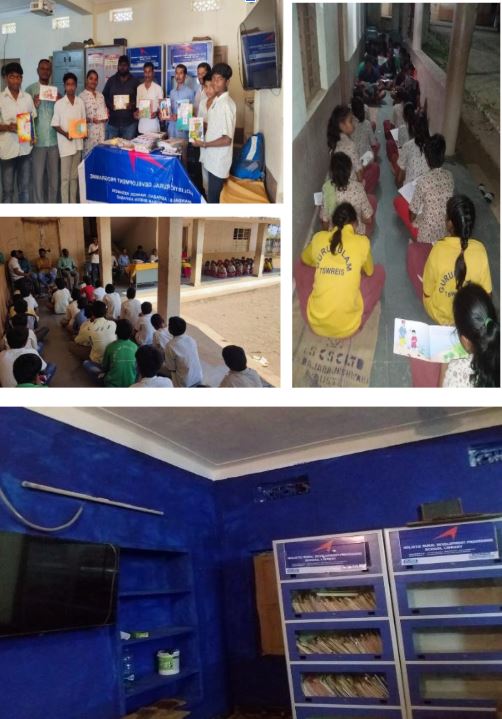
CYDA stepped in to bring change, not just in the curriculum but in the very core of these children’s educational experience. CYDA addressed the challenges faced by these students and developed a targeted strategy to improve students’ educational experience. In this context, CYDA introduced a culture of reading at the school by providing a collection of 646 books designed to the needs and interests of the students. The books ranged from colorful picture books for younger children to more advanced storybooks for the older students. Alongside the reading initiative, CYDA introduced remedial classes. These classes were designed to address the academic gaps many of the students had accumulated over the years. In small, personalized groups, the children were given the chance to focus on specific challenges they faced in literacy and arithmetic. The remedial lessons provided a much-needed bridge for these children to catch up and move forward with their learning.
This variety of books sparked curiosity and excitement in the students, helping them overcome their fear of reading. The students were encouraged to borrow books daily at 4:00 PM, creating a routine that adopted regular engagement with reading. For the first time, the students began to experience the joy of reading at their own pace, free from the pressures of formal classroom instruction.
Before CYDA’s initiative, many students were too intimidated to even touch a book. However, as the students began to borrow books and participate in the remedial classes, a remarkable transformation occurred. The once-timid learners began to show enthusiasm for their studies. Their confidence grew as they experienced success in reading and understanding new concepts. The students who had once struggled with basic reading comprehension and arithmetic now engaged with books and lessons more effectively. Their vocabulary expanded, their fluency improved, and their overall academic understanding deepened.
The Transformation: A Place of Empowerment
The school became a place of empowerment, where the students were given the tools to overcome their challenges and build a brighter future. With the support of CYDA, the Mowad Tribal Welfare Ashram School has become a symbol of hope and change, proving that with the right resources and support, even the most marginalized communities can overcome obstacles and achieve success in education. With CYDA’s intervention, the school has become a place of empowerment, a place where hope has transformed into tangible progress.
“Education is not just about reading books. It’s about believing you can be something more than you were yesterday.”
Proj: Holistic Rural Development Project of Fifteen Villages from Asifabad and Wankidi Blocks of Kumuram Bheem Asifabad District of Telangana
